The 3rd China Climate Engagement Initiative (CCEI) Annual Conference Successfully Held
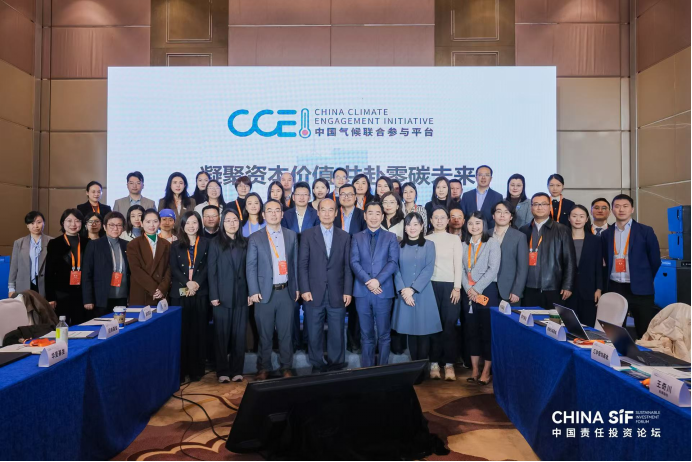
On December 3, 2025, the 3rd China Climate Engagement Initiative (CCEI) Annual Conference was successfully convened in Beijing. Hosted by CCEI and co-organized by the Institute of Finance and Sustainability (IFS) and the China Sustainable Investment Forum (China SIF), the conference was themed "Uniting Capital for a Zero-Carbon Future". It provided a comprehensive review on CCEI’s achievements in 2025 in mobilizing institutional investor engagement on climate issues, developing methodologies, conducting thematic research, and capacity building. The event also facilitated in-depth discussions on how capital markets can support the low-carbon transition of listed companies.
Set against the backdrop of deepening global climate governance and increasing capital market focus on sustainable development, this year’s conference centered on core topics such as investor stewardship practices, just transition, and Scope 3 disclosure and emissions reduction. It aimed to advance listed companies’ transition toward low-carbon, high-quality development through more collaborative investor engagement mechanisms. Over 70 representatives attended, including members of the CCEI’ Board, member institutions, supporting organizations, listed companies, other domestic and international investment institutions, and international organizations and professional bodies.
The conference was moderated by Ms. Jeanie YANG, CCEI Assistant Secretary, Senior Researcher, Institute of Finance and Sustainability (IFS).
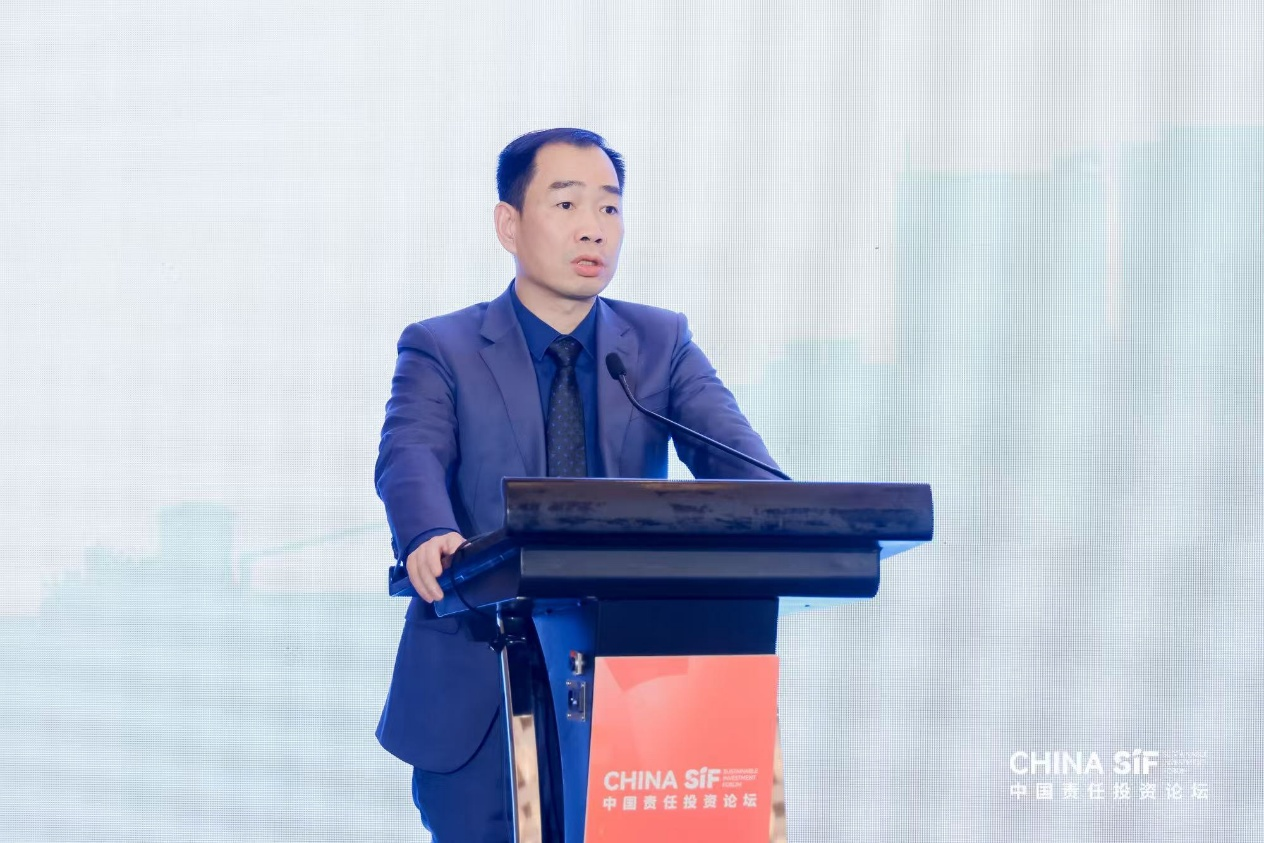
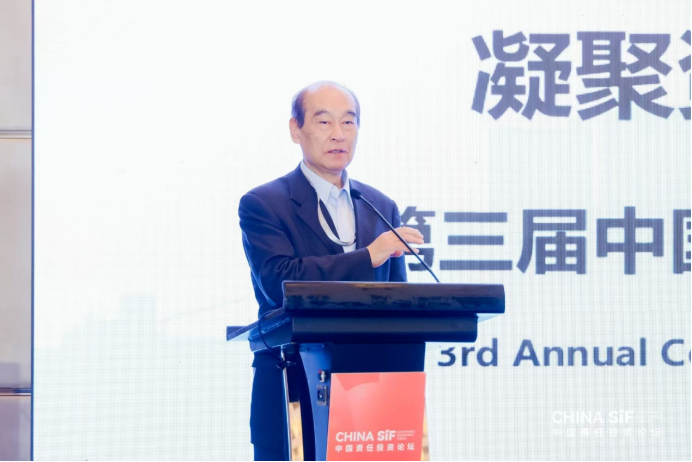
The conference officially opened with remarks from CCEI Board Members Mr. WANG Zhongmin and Mr. MA Jun.
Mr. WANG Zhongmin, CCEI Board Member, Former Deputy Chairman of the National Council for Social Security Fund, China, Honorary Chairman of China SIF, delivered a speech structured around three key observations on the theme “Uniting Capital for a Zero-Carbon Future”. He noted that China’s green finance development has historically focused more concentrated on the liability side of the balance sheet, with instruments like green bonds significantly outweighing equity-side products. However, in the current market environment, asset management institutions are increasingly becoming pivotal drivers of the zero-carbon transition, shifting the focus of green investment rapidly from liabilities to assets. He emphasized that the asset side not only bears responsibility for disclosure and risk management but also serves as the core platform for implementing zero-carbon scenarios, deploying low-carbon technologies, and innovating governance mechanisms. Through governance empowerment and strategic capital allocation, investors can effectively steer companies toward greening their products, technologies, and organizational structures, thereby aligning incentives for asset appreciation and low-carbon transition. With advancements in AI, computing infrastructure, and optical modules, the asset-side “zero-carbon application scenarios” continue to expand and are poised to become a significant source of future enterprise value and capital appreciation.
Mr. MA Jun, CCEI Board Member, Chairman of Green Finance Committee of the China Society for Finance and Banking, and President of the Institute of Finance and Sustainability (IFS), delivered an opening address online. He reviewed the platform's progress over the past two years, highlighting the continuous expansion of CCEI’s member institutions and assets under management (AUM), the refinement of its governance mechanisms, and the generation of practical outcomes in areas such as joint engagement, low-carbon transition of listed companies, just transition, Scope 3 disclosure, and stewardship. He also noted the establishment of stable cooperative relationships with international organizations like PRI, ISSB, and CA100+, which has enhanced the platform's global influence. Mr. MA pointed out that despite uncertainties in global climate action, China's green and low-carbon industries have demonstrated strong competitive advantages, laying a solid foundation for investor-led climate initiatives. Financial institutions will play a crucial role in promoting listed companies to develop transition plans and advance their operational and value chain’s decarbonization. Looking forward, he outlined five expectations for CCEI: bringing together more institutional investors, enhancing the effectiveness of joint engagement, strengthening research on key industries and issues, expanding policy and market influence, and deepening international cooperation to amplify CCEI's role both domestically and internationally.

During the CCEI Work Report session, Mr. ZHAO Lijian, CCEI Joint Secretary-General and Director of Greentech Innovation and Investment at the IFS, provided a detailed overview of CCEI's 2025 progress. He reported that since its inception in 2023, CCEI has grown to 33 member institutions representing nearly RMB 80 trillion in AUM, while further strengthening its governance structure, expert committee, and support network. Operating on three core pillars—"corporate engagement, methodology development, and capacity building"—CCEI launched new joint engagement initiatives in 2025 with companies including Satellite Chemical (STL), Tianqi Lithium, ENN Natural Gas, and Baosteel. It also conducted follow-up evaluations of pilot companies such as Zijin Mining, Muyuan Foods, and Sinoma. These evaluations revealed that many recommendations from the CCEI’s Engagement Working Groups had been adopted by the companies, addressing key issues like Scope 3 disclosure, governance enhancements, and emissions reduction implementation, thereby driving substantive progress in their climate transitions. The CCEI has also advanced methodology development, producing a draft Climate Engagement Handbook. In capacity building and thematic research, CCEI organized extensive training and published multiple reports on stewardship, just transition, Scope 3, and transition finance. Looking ahead, Mr. Zhao stated that CCEI will continue to expand its influence, release the methodology handbook, foster mutual empowerment between investors and companies, strengthen domestic and international cooperation and increase its policy and market impact.
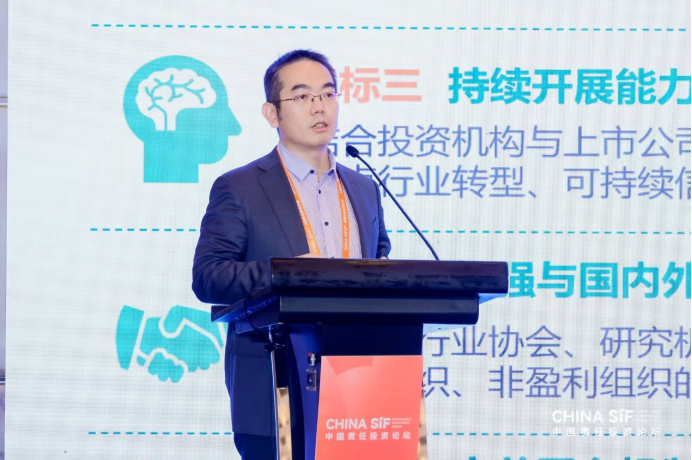
Next, representatives from three CCEI Engagement Working Groups presented detailed case studies, illustrating how investor engagement supports corporate low-carbon transitions and sustainable value discovery.
Case ONE: Satellite Chemical (STL) Working Group – Led by Fidelity International
Ms. HU Jingmin, Sustainable Investing Lead, FlL Fund Management (China), explained the rationale for selecting Satellite Chemical (STL) as an engagement partner and summarized the progress made. She emphasized that stewardship is a fundamental component of Fidelity’s sustainable investment approach, encompassing active dialogue with issuers and the exercise of voting rights. Joining CCEI represents a strategic priority, enabling Fidelity to collaborate with domestic asset managers to accelerate climate action among Chinese listed companies.
The chemical sector is characterized by high direct emissions and hard-to-abate processes; yet its products are essential raw materials for numerous downstream industries, giving emission reductions in this sector a significant impact on downstream Scope 3 footprints. STL exhibits low-carbon characteristics in its product mix, feedstock substitutions, and process optimizations, positioning it to capture substantial transition opportunities. Concurrently, the company faces increasing ESG demands from downstream customers and has room for improvement in areas such as disclosure.
Therefore, Fidelity chose to lead engagement with STL. Since establishing a structured dialogue in September last year, Fidelity has conducted comprehensive peer analysis, organized the on-site visit and joint engagement workshop in February, and submitted detailed improvement recommendations. STL has demonstrated strong ESG execution, adopted many suggestions and achieved notable upgrades in mainstream ESG ratings this year. Fidelity intends to maintain regular dialogue with the company to develop a replicable case study for sustainable transition within the chemical industry.
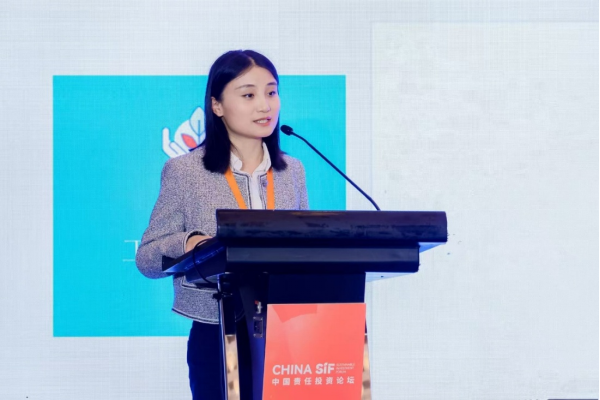
Mr. LI Yang, Investor Relations Director, General Manager of Chairman's Office at Satellite Chemical (STL), outlined the company’s development history and its overall progress on green and low-carbon transition. He noted that, STL has extended its industrial chain through continuous technological innovation and is striving to become a world-class advanced chemical and new materials company. With functional chemicals, polymer materials, and new-energy materials as the core products, STL is positioned as a feedstock supplier to many downstream low-carbon industries.
On emissions, STL’s “light-olefins cracking” process, which uses ethane and propane as feedstocks, generating significantly lower carbon intensity than alternative methods. The company has also deployed carbon-capture-and-utilization projects, increased renewable-power procurement, and optimized equipment energy efficiency, achieving cumulative emission reductions that create a competitive advantage in areas such as by-product hydrogen utilization. STL has committed to reaching value-chain carbon neutrality by 2050 and plans to invest RMB 10 billion in R&D over the next five years, allocating 40 % of that budget to clean-energy technologies and green-materials innovation, thereby reinforcing its leadership in the sector’s low-carbon transition. Mr. Li expressed the company’s appreciation for CCEI investors’ continued attention and support.
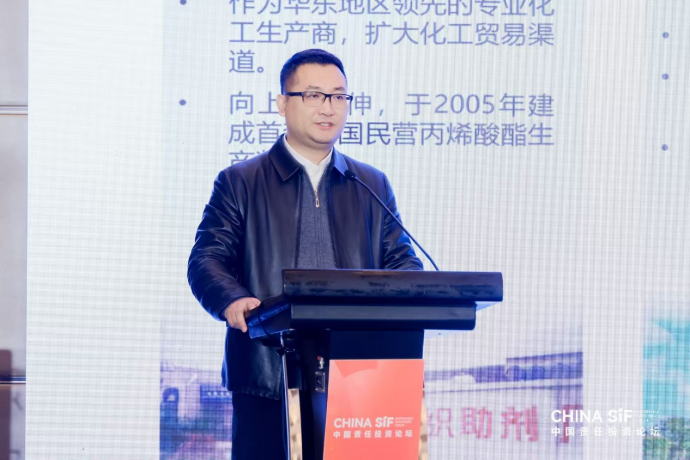
Case TWO: ENN Working Group – Led by Harvest Fund
Mr. WANG Qichuan, ESG Manager of ENN, summarized the company’s green transition journey and its recent dialogue with the CCEI investor delegation. He noted that ENN, as an energy company covering the full natural-gas value chain, has inherently transitioned from high- to low-carbon operations, making ESG an endogenous growth driver. The company has integrated climate risk into its enterprise-wide risk management framework, set a “2030 peak, 2050 neutrality” target, completed Scope 3 accounting across 15 categories, and disclosed carbon-intensity data for its core natural-gas products.
The CCEI site visit in July served as a two-way bridge between the company and investors, clarifying the climate priorities of domestic asset owners and informing ENN's subsequent improvement plans. ENN’s management team takes investor calls for accelerating decarbonization seriously: following the voluntary divestment of its coal business two years ago, ENN divested its methanol operations this year to further optimize its energy mix toward low-carbon sources. Improvements in third-party ESG ratings have already correlated with increased ESG-oriented investment holdings, validating the value-creation potential of robust ESG execution. Mr. Wang stated the company will continue to quantify ESG outcomes and welcomed investor support on supply-chain GHG emissions data, sector-wide abatement pathways, and technical advice to accelerate green development across the energy industry.
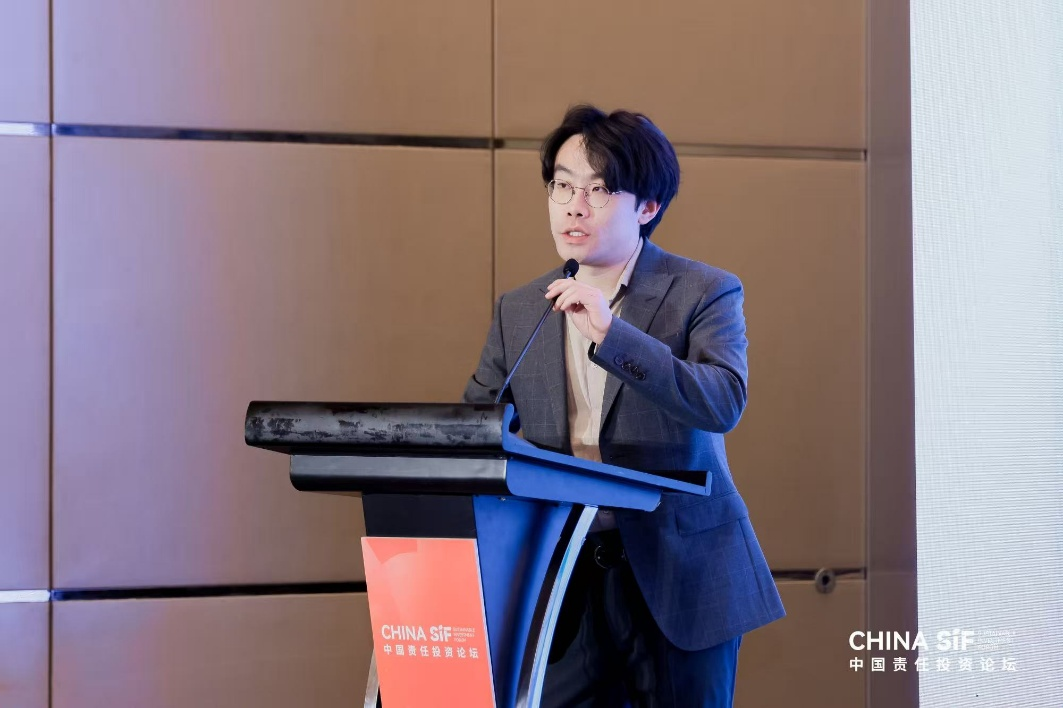
Ms. KONG Linghan, ESG Analyst at Harvest Fund Management, outlined the progress of the CCEI ENN Working Group. The group selects companies based on three criteria: ESG factors must materially affect long-term competitiveness, the company must be an industry leader, and it must be a significant portfolio holding. As China’s largest private natural-gas company, ENN meets all three criteria and was chosen for joint engagement.
Led by Harvest Fund, the working group brings together several domestic and international investors to conduct research, peer benchmarking, pre-engagement preparation, and on-site dialogue. Discussions with management have focused on climate change, governance structure, and ESG issues integral to the core business. Drawing on the TCFD framework, investors recommended updating the green action plan, setting more granular milestones, disclosing methane emissions, and exploring negative-carbon technologies.
Ms. Kong highlighted three features that make ENN’s ESG approach replicable: systematic management, forward-looking and quantified targets, and supply-chain collaboration. She argued that investors should focus more on tracking transition trajectories, not just static scores, delve deeper into management practices, transform ESG value into the financial language understood by capital markets, and unlock hidden ESG value to better facilitate the companies’ long-term low-carbon transition.
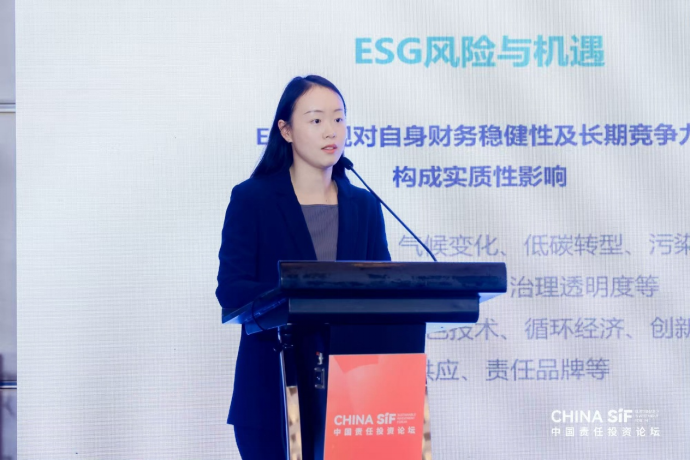
Case THREE: Tianqi Lithium Working Group – Led by Southern Asset Management
Ms. Michelle XIAN, Senior Vice President of the Sustainable Development Department at China Southern Asset Management, reviewed the overall progress of the Tianqi Lithium Working Group. She noted that the group is co-led by China Southern and Impax Asset Management. Tianqi Lithium was chosen for in-depth engagement for two primary reasons: first, lithium’s pivotal role in the new-energy and storage value chain and Tianqi’s leading position in the lithium-chemicals industry; second, the company's vertically integrated international footprint across "resource–chemical–battery" segments, which provides strong demonstration value while exposing it to heightened ESG expectations.
China Southern Asset Management had previously provided recommendations to Tianqi Lithium on ESG disclosure and governance improvements. Leveraging CCEI's methodology, collaboration approach, and experience, a multi-party working group was formed to conduct systematic joint engagement. In May 2025, a coalition of investors, experts, and research institutes visited Tianqi's headquarters and R&D campus for in-depth discussions on emission-reduction targets, management processes, overseas asset governance, and community-risk mitigation. These efforts successfully encouraged the company to integrate ESG metrics into executive KPIs and strengthen target quantification.
Ms. Xian stressed that engagement must extend beyond disclosure to help companies integrate ESG indicators into production, management, and operational workflows. She also called for clearer green-finance incentives to help firms sustain long-term decarbonization investments through market cycles.

Ms. Christina WANG, Director of ESG and Sustainability at Tianqi Lithium, outlined the company’s interim results from working with the CCEI investor group. She noted that Tianqi Lithium established a dedicated ESG function in 2016 and this year refreshed its sustainability strategy, setting a lithium-centric goal of becoming the upstream benchmark for sustainable new-energy supply by 2030 and launching five “net-zero” strategic initiatives. The company has committed to halving its carbon intensity and reducing absolute emissions by 42 % by 2030 (2021 baseline) and to reach net-zero by 2050. These targets are now integrated into performance assessment of all business units and senior executives.
Ms. Wang unveiled this year’s joint innovation with the working group: a high-value utilization pathway for lithium slag. Process upgrades convert metallurgical residue into an “alumino-silica micro-powder” that replaces high-emission virgin minerals in glass-fibre production, delivering over 50% life-cycle carbon-footprint reduction. The solution helps downstream wind energy and glass-fibre industry customers meet CBAM and EU battery-regulation requirements while offering a new circular economy pathway for the lithium chain. She called on all value-chain participants to adopt long-term thinking, a common language, and collaborative action to advance sustainable development.

Subsequently, four research outcomes of CCEI were released .
Ms. Jeanie YANG, CCEI Assistant Secretary, Senior Researcher of Institute of Finance and Sustainability (IFS), introduced the CCEI Investor Collaborative Engagement Handbook (Exposure Draft) (hereinafter referred to as the “Handbook”). She noted that as more investment institutions carry out joint climate engagement under the CCEI framework, a systematic and replicable methodology is needed. By aligning objectives, principles, processes, and role divisions, the Handbook aim to create a foundation for concerted action, fully mobilize members’ initiative and expertise, and expand the scope and impact of corporate climate engagement dialogues. This work is launched in response to a propose on the CCEI Board meeting earlier this year, the Handbook is a key milestone in CCEI’s methodological build-out.
Structured in five chapters, the Handbook cover background and purpose, platform mission and governance, engagement principles and methods, workflow, and supportive mechanisms. It establishes five core principles: long-term value orientation, results orientation, collaborative cooperation, integrity and transparency, and independent judgment. It proposes three operational formats—joint working groups, joint research visits, and multi-stakeholder roundtables—and details a six-step workflow: target screening, working-group formation, issue identification, pre-engagement, on-site dialogue, and continuous follow-up. The Exposure Draft is now open for comment, with the Secretariat planning to solicit feedback from the Board and member institutions before publishing the final version in the first half of 2026.
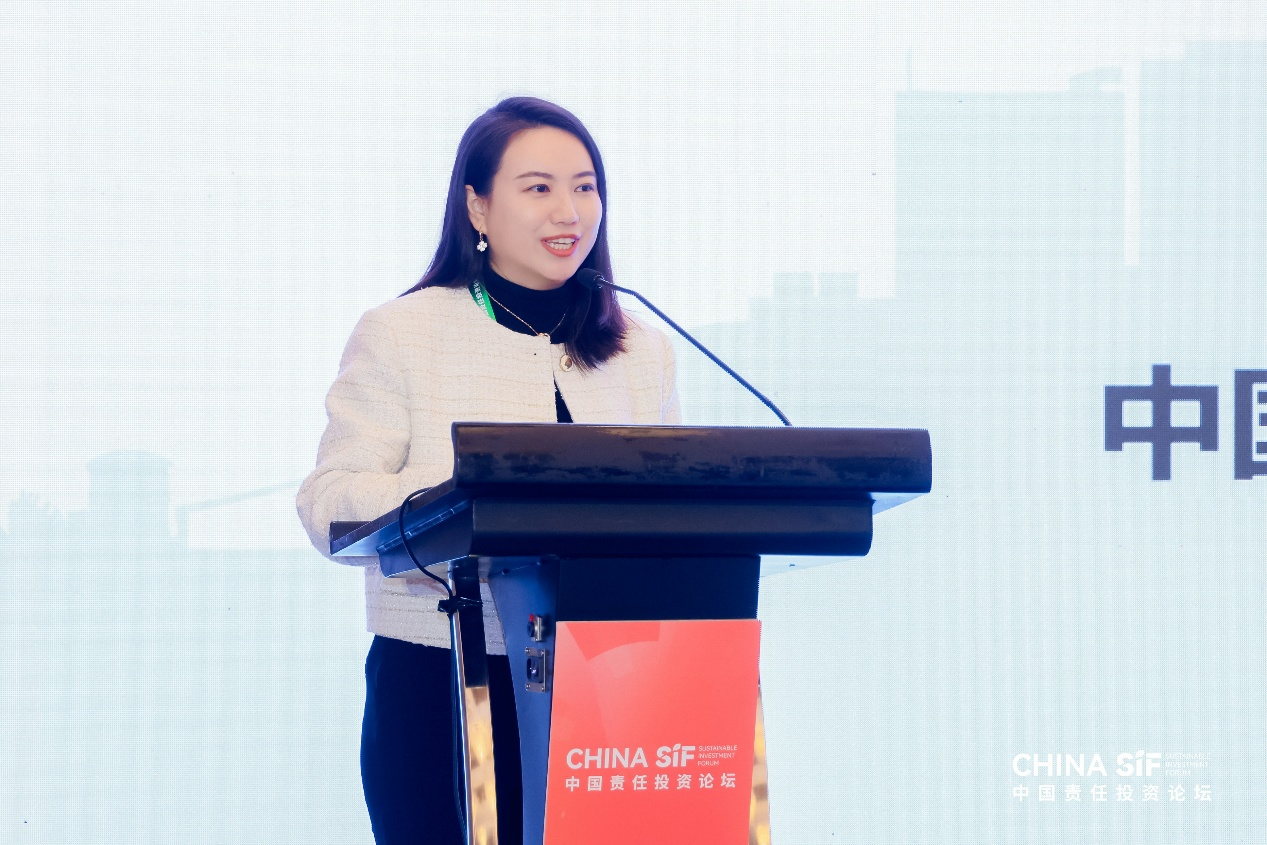
Ms. CHEN Shuyun, ESG Analyst at BNP Paribas ABC Wealth Management, released the Report on the Practice of Just Transition in China's Asset Management Industry ( hereinafter referred to as the “Report”)on behalf of the CCEI Just Transition Capacity-Building Working Group. She explained that the Working Group organized three thematic workshops and conducted survey research among asset managers last year. This Report consolidates these findings and phased outcomes of those efforts. The Report explores both concept and action: first, tracing the evolution of just transition globally and in China, and arguing that equity and inclusiveness are prerequisites for social stability and policy support amid an accelerating climate transition. Second, based on survey data, it identifies key bottlenecks for domestic asset managers regarding awareness, methodology, data, and internal resources.
The Report recommends that asset owners and managers integrate just transition into investment and net-zero strategies , ESG incorporation, risk assessment, and stewardship practices. It also advises pushing for corporate disclosure of relevant data, strengthening social-dialogue mechanisms, and exploring thematic investments and innovative financial instruments. Furthermore, it calls for industry-wide momentum through platform collaboration, policy advocacy, and cross-sector partnerships to ensure the green transition remains socially anchored and sustainable in the long term.

Ms. ZHANG Nan, Director at Carbon Mind, then released the 2025 Research on Scope 3 Emissions Disclosure by Chinese Listed Companies (hereinafter referred to as the “Research”) . The Research covers 695 constituents of the CSI 300, H-share, and Hang Seng LargeCap indices, analyzing Scope 3 data from public ESG reports and CDP disclosures. The overall Scope 3 disclosure rate increased from 22 % in 2024 to 30 %, though 70% of companies still do not disclose Scope 3 figures, with significant variation across sectors—real estate leads in disclosure rates. Most reporting companies use the GHG Protocol, but only 15 % break down emissions by category. The most frequently disclosed categories remain business travel and employee commuting, while material categories for manufacturers ("purchased goods & services") and financial institutions ("financed emissions") are reported less often. Methodology disclosure is even weaker: among the 209 companies disclosed a Scope 3 figure, only about 11% provide a full methodological annex, hindering comparability.
The Research highlights a significant gap between disclosure and target-setting: merely 7 % have disclosed Scope 3 reduction targets, and only 4 % have announced net-zero goals. The Research proposes eight recommendations, including active participation in international standard updates, fostering value-chain collaboration to obtain data, and improving disclosure quality and methodological transparency to develop Scope 3 reporting that is more comparable, traceable, and verifiable.
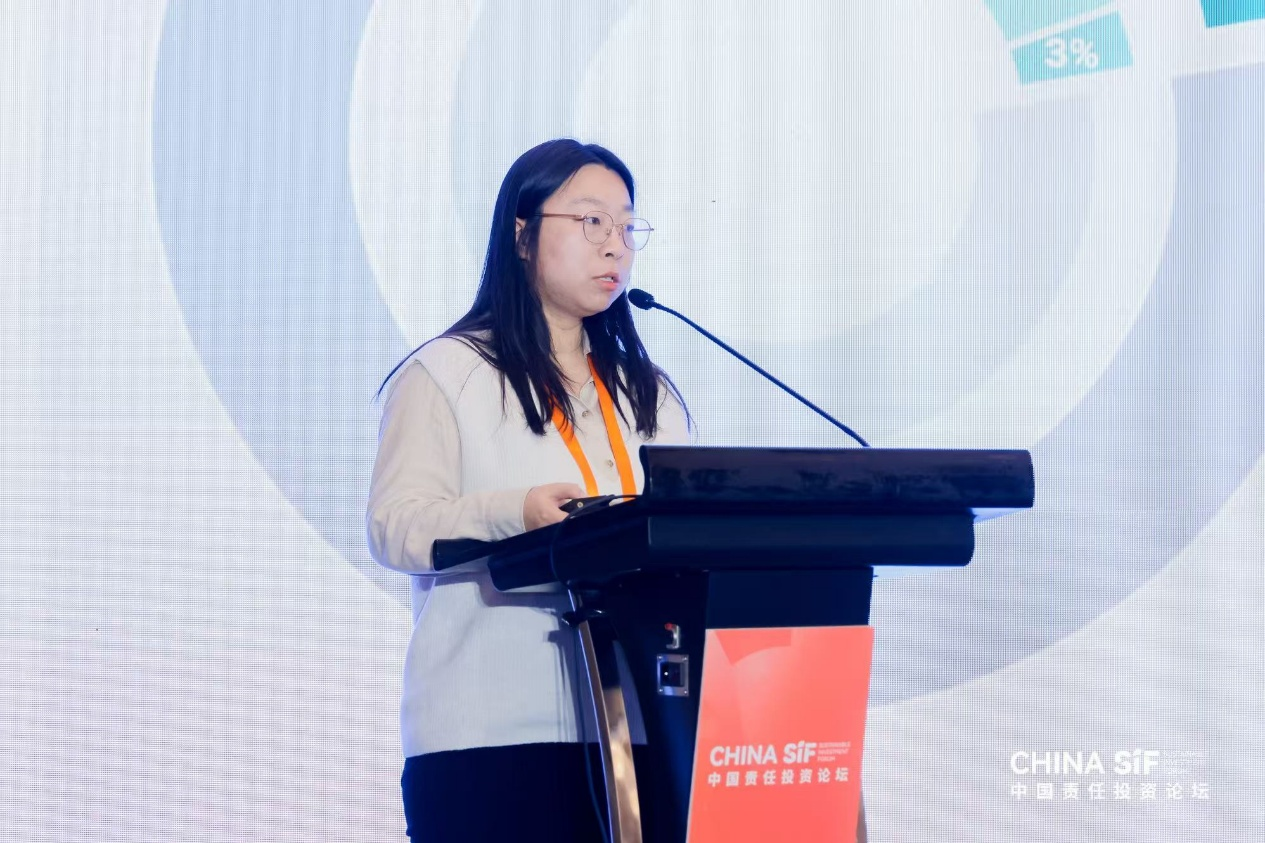
Ms. CAO Yuqian, Senior Advisor on Sustainable Finance at the China Sustainable Investment Forum & SynTao Green Finance, released the research report “Facilitating a Just Transition through Corporate Disclosure: Assessment and Recommendations for Listed Companies in Key Sectors” (hereinafter referred to as the “Report”). Building on domestic and international disclosure standards, the Report proposes a just-transition evaluation framework tailored to Chinese listed companies and applies it to 313 listed firms across 11 materially relevant sectors. At the corporate level, only PetroChina and CNOOC explicitly state support for just-transition principles, and fewer than 20 % of companies provide even a basic level of just-transition disclosure. However, at the project level, some companies have already implemented concrete just-transition measures that can serve as leading practices. The full Research is now available on the China SIF website.
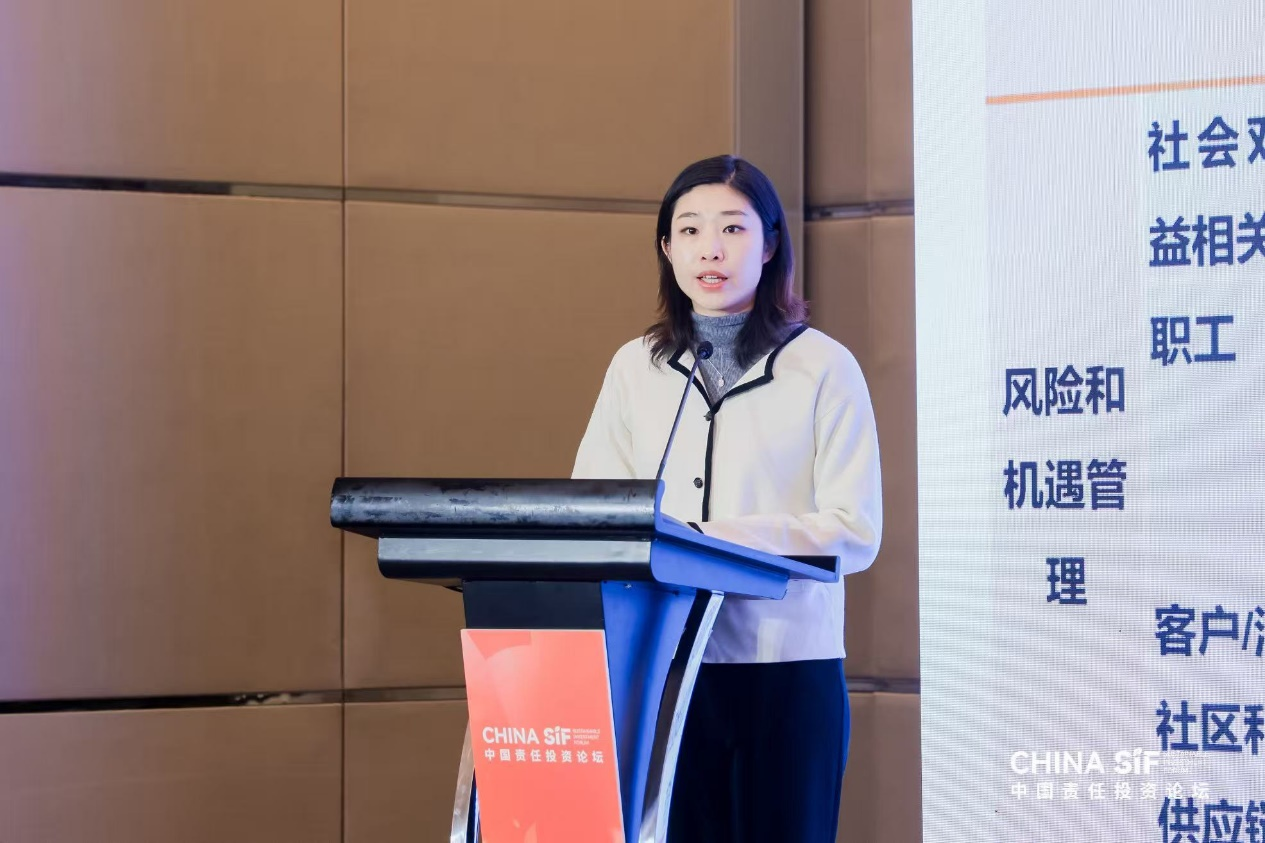
The conference then moved to the launch of new working groups.
Mr. ZHAO Lijian, CCEI Joint Secretary-General, Director of Greentech Innovation and Investment at the IFS, introduced the background and objectives of the “Scope 3 Champions Working Group.” He noted that Scope 3 emissions have become one of the most discussed yet challenging topics in investor–company dialogue, with a clear need for more systematic mechanisms to address the gaps of category identification, methodology disclosure, target-setting, and decarbonization pathways. CCEI has therefore elevated its previous research and pilots into a permanent thematic working group to generate stronger sector-wide impact.
Over the past year, the dedicated Scope 3 events CCEI organized have attracted participation from more than 50 listed companies, indicating strong demand for capacity building. The new group, led by the Secretariat in collaboration with member institutions and technical teams, will conduct research, promote commitments, support companies in establishing Scope 3 targets and reduction practices, and explore how financial institutions can incentivize value-chain emissions management. Mr. Zhao announced that Foxconn Industrial Internet, ENN Energy, VNET Group , and Tianma Microelectronics have committed to the "Scope 3 Champions" initiative, formally launching the working group.
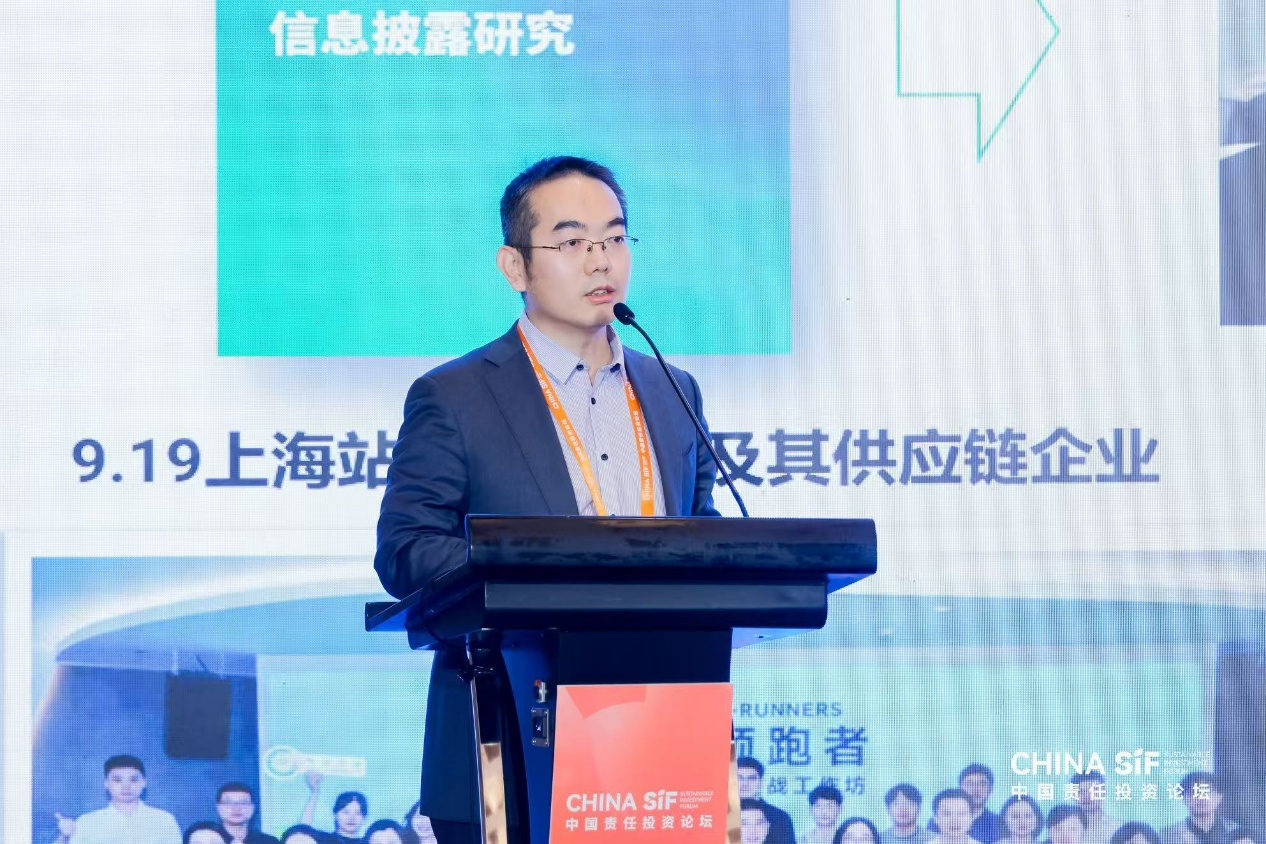
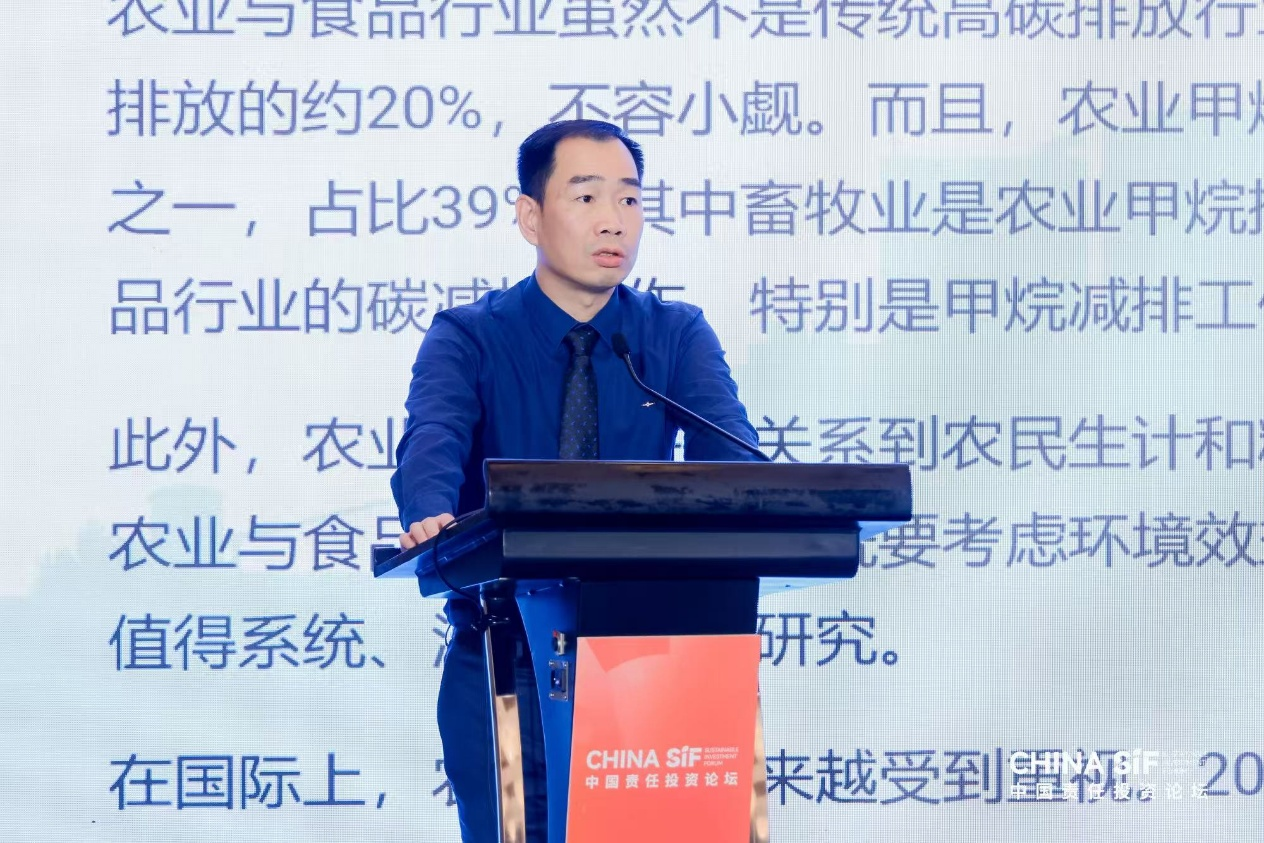
Mr. Guo Peiyuan, CCEI Board Member and Chairman of China SIF, then outlined the concept for the new “Agriculture & Food Transition Working Group.” He noted that China’s September pledge to cut economy-wide net GHG emissions 7–10 % below peak levels by 2035 will systematically bring sectors such as agriculture into the transition, while raising the profile of non-CO₂ gases, especially methane. Dairy-related emissions are a key source and are already gaining significant investor attention overseas.
To align with these policies and market trends, CCEI will initiate a dedicated workstream on low-carbon transition in agriculture and food, focusing on methane-reduction pathways for dairy companies and the response strategies of listed agri-food firms. The group aims to deliver interim findings in 2026 and to deepen investor–company dialogue. CCEI has already held technical exchanges with China Agricultural University and the Environmental Defense Fund (EDF), and hosted a closed-door session during the World Agri-Tech Innovation Summit, where both investors and companies expressed clear interest. The working group is now open for recruitment and welcomes member institutions and relevant listed companies to join.
The program then moved to a panel discussion moderated by Mr. Jonathan QIAN, Joint Secretary General of CCEI and Secretary General of China SIF. Mr. Qian noted that the session was designed to generate actionable insights and share hands-on experience between investors and listed companies on stewardship, Scope-3 abatement and sectoral transition pathways. He emphasized that CCEI’s joint engagements over the past two years have demonstrated that constructive dialogue advancing from principles to methodologies and execution requires bringing the investment and industrial sides together. To this end, the panel included representatives from two leading companies that have not yet covered by CCEI working groups, aiming to build shared understanding and identify potential areas for future collaborative action.
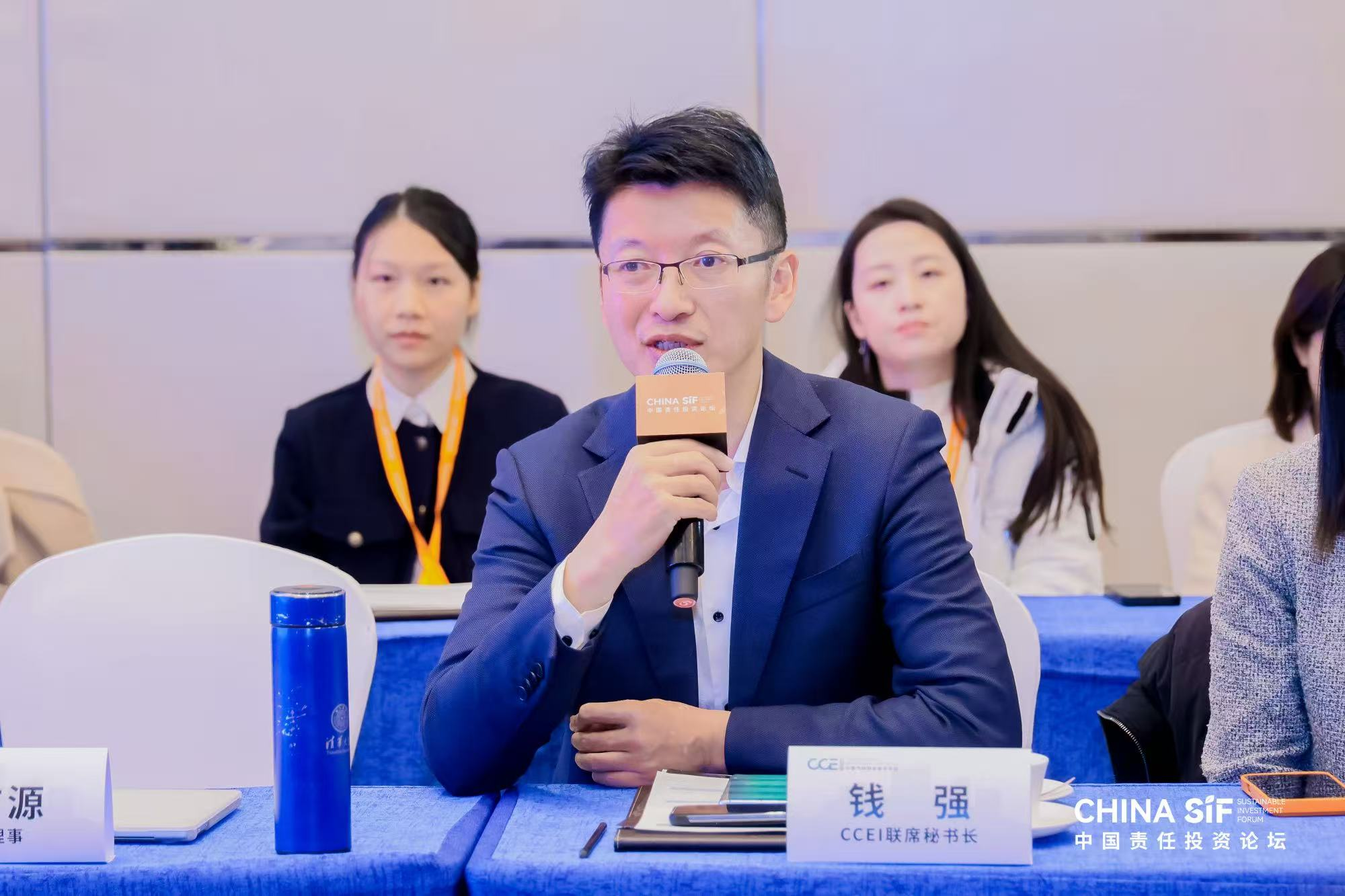
Mr. Wilson WEI, Chief ESG Researcher at E Fund Management, outlined the firm’s recent experience in stewardship and corporate communication. He noted that E Fund’s initial involvement in engagement was driven primarily by overseas clients, but sustained interaction with listed companies generated internal momentum, leading to the integration of climate and governance considerations into the investment research process. The company now operates a standing governance-communication program that formulates tailored engagement plans for more than 100 portfolio companies annually, focusing on issues of investment, risk and external materiality. Mr. Wei emphasized that sustained, structured dialogue with issuers has already produced tangible improvements in corporate governance and ESG practices in multiple cases, serving as an important tool for asset managers to contribute to a high-quality capital market.

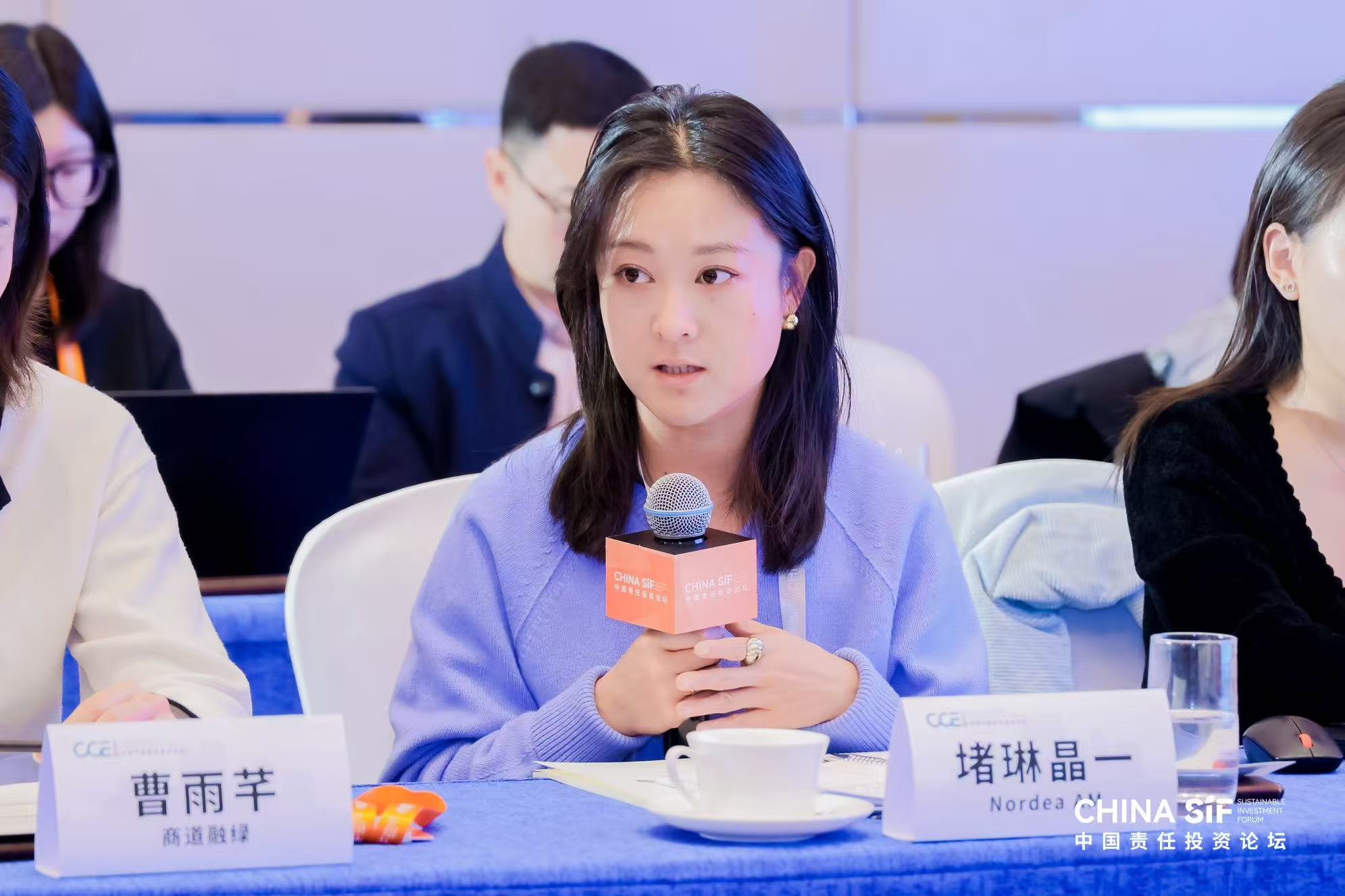
Ms. Lena DU, Senior ESG Analyst at Nordea Asset Management, said that Nordea Asset Management joined CCEI this year to strengthen on-the-ground dialogue with Chinese listed companies. While Nordic investors have over two decades of ESG experience, differences in terminology and materiality assessments still arise when engaging Chinese issuers. CCEI membership provides deeper insight into local practices and fosters mutual learning with domestic asset managers. She emphasized that global climate and transition investing are shifting from a sole focus on outcomes to increased scrutiny of the transition process itself. Continuous communication with domestic companies is essential to accurately track transition dynamics, support firms in articulating credible transition narratives for international markets, enabling effective dialogue between onshore and offshore stakeholders.
Mr. WANG Zifu, Sustainable Development Expert, LONGi Green Energy Technology Co., Ltd., stated that, as a global leading company in green energy industry, LONGi carries a dual responsibility of enabling global emission reductions while controlling its own carbon footprint. Since joining the SBTi in 2020, LONGi has completed annual accounting, verification, and disclosure for Scope 1, 2 and 3 emissions, and published the Climate Action White Papers at every (UNFCCC) COP to maintain transparent stakeholder communication. He noted that the primary emissions from PV-manufacturing stem from electricity consumption, making increased renewable energy usage the most effective abatement lever, while upstream raw materials constitute the largest portion of Scope 3 emissions. Fundamentally, the low-carbon development of the solar industry depends on greening electricity across the entire value chain and realizing the resulting mitigation value through green consumption, procurement, and finance. He expressed interest in fostering collaboration with CCEI, and to explore mechanisms for PV supply chain decarbonization and low-carbon value realization.

Ms. Amy SONG, Chief Sustainability Officer at GCL Group, stated that GCL—an integrated renewable-energy technology conglomerate spanning solar, storage, hydrogen and new-energy materials and equipment—has four listed subsidiaries that form a complete industry chain from polysilicon to modules and from materials and equipment to power generation and energy services. GCL Technology leads the industry with its low-carbon granular-silicon process, which reduces unit energy consumption by nearly 80% compared with conventional rod silicon. If its full 480 kt annual capacity is utilized, it could save approximately 20 billion kWh of electricity and eliminate over 10 million tCO₂e annually, providing significant Scope 3 reduction potential for PV-module manufacturers.
Ms. Song noted that low-carbon materials are becoming a structural competitive advantage for GCL throughout the solar cycle, tangibly improving the company's fundamentals. She also highlighted shared industry challenges, including tightening overseas regulations and accelerating harmonization of carbon footprint standards. GCL welcomes stakeholders to visit its industrial parks for deeper engagement to jointly advance the sector's sustainable upgrade.
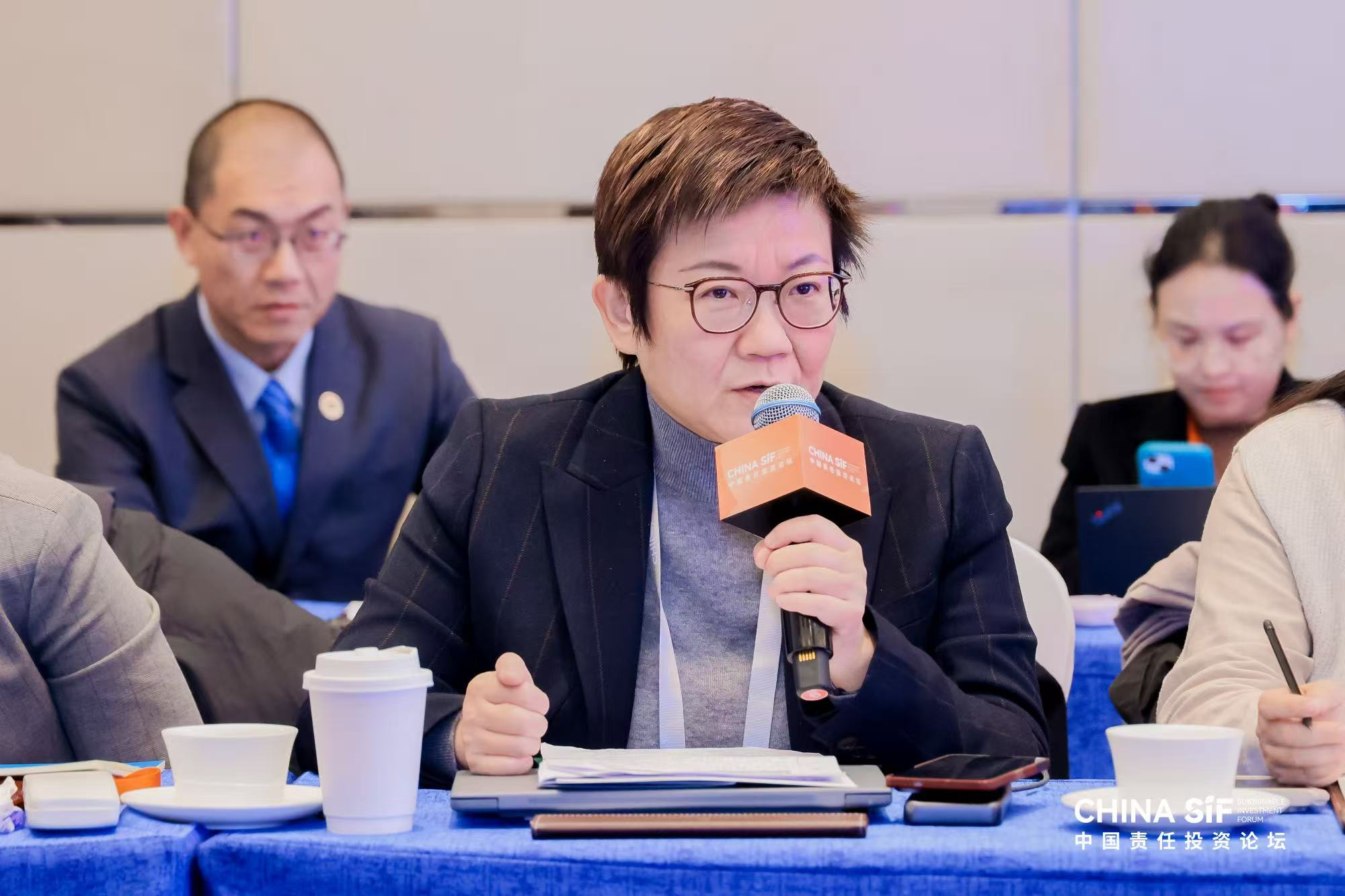
In his closing remarks, Mr. GUO Peiyuan, CCEI Board Member and Chairman of China SIF, observed that this year’s discussions and deliverables show the platform has “hit its stride,” having developed a more systematic methodology and moved from principles to deeper, value-chain-level practice on key issues such as Scope 3. He noted that Chinese and foreign institutions differ on climate topics yet remain highly complementary, leaving ample room for future exchange.
Looking ahead, CCEI will continue to expand membership, with a focus on attracting more bank wealth management subsidiaries and insurance asset managers, while placing greater emphasis on measuring engagement outcomes, conducting targeted thematic research, and widening sectoral influence. The CCEI will also deepen international cooperation, including alignment with the UK-China Transition Finance Working Group and related global initiatives. These steps, Mr. Guo said, will support CCEI’s sustained growth.